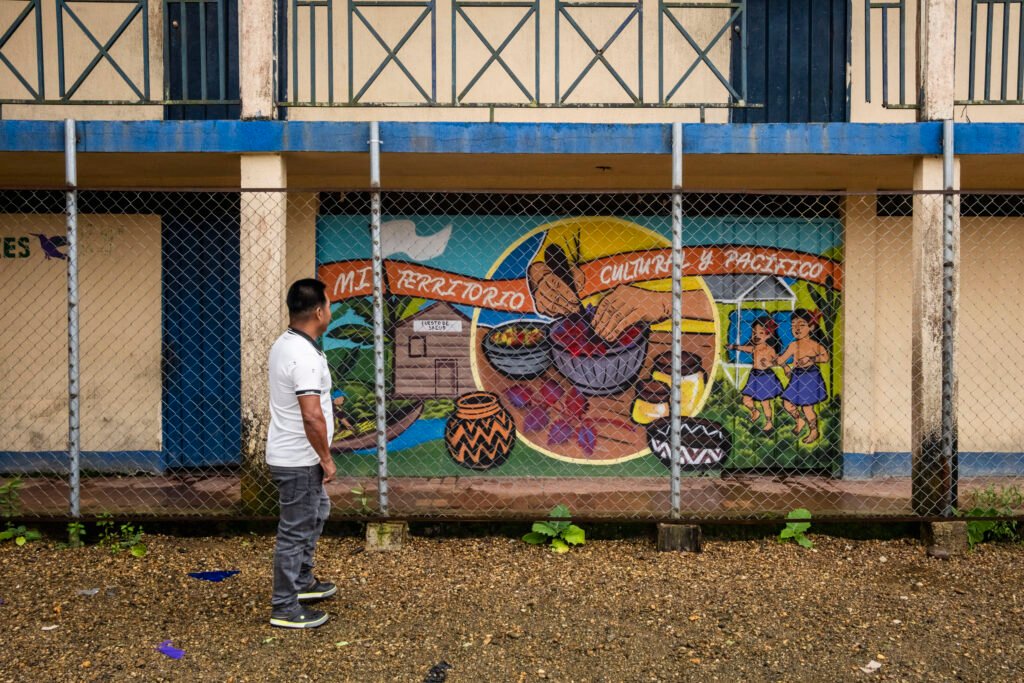
Community murals in the Papayo Indigenous reserve, in Chocó, Colombia, strengthen bonds of belonging and trust among community members. These paintings also serve as a collective memory captured on walls, portraying fragments of their history and cultural identity. The MIRE+ Consortium supported their creation. Photo: Mariano Vimos / Aica Colectivo
The territory that for generations has been a source of food, connection, and life for an Indigenous community in western Colombia has also become a place of restriction and confinement. Going out to fish, walking to the fields, or allowing children to play outside is no longer an everyday decision—it is a risk.
For years, this community has endured the consequences of armed conflict. Non-state armed groups have imposed restrictions that limit families’ mobility and affect their access to food, healthcare, and livelihoods. On top of this, when the rains come and the territory floods, crops are lost and disease increases, making conditions even more difficult for families.
In the face of this reality, the community has organized to move forward and seek solutions that allow it to grow stronger. Families, together with their leaders and traditional authorities, have driven efforts to protect their territory, improve access to water, strengthen healthcare, and restore their crops. To do so, they have formed groups leading initiatives in areas such as self-protection, health, water stewardship, artisan work, community gardens, and local governance (cabildo).
This path toward rebuilding and strengthening has been supported by the MIRE+ Consortium over the past two years, providing humanitarian assistance and strengthening local capacities.
“Our community had grown somewhat silent because so much was happening, and we didn’t know how to face these challenges. Today, thanks to these processes, families at least have a better understanding of the problems we face,” says José, a member of the community.
Strengthening Community Organization
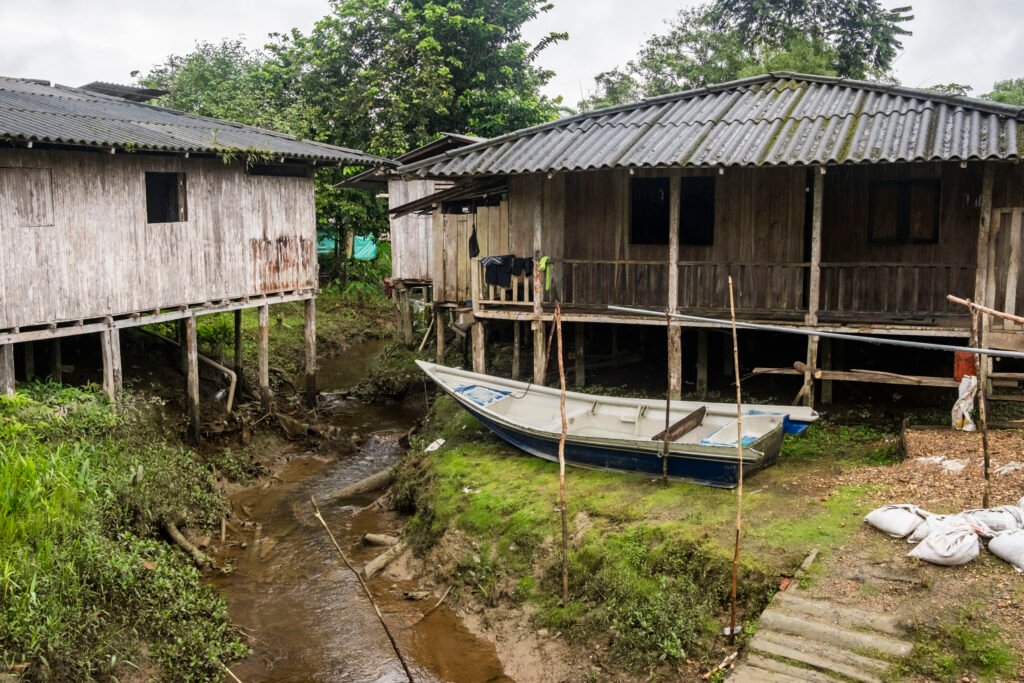
Today, even amid ongoing emergencies and constant risks, the community has strengthened its organization. The Indigenous Guard now has tools that facilitate communication and coordination. “With these tools, what we did was raise white flags to show that this is a peaceful civilian population. We then worked with the community, sharing what we learned in the training. As authorities, we received vests to identify ourselves in the territory, community flags, and self-protection equipment: boots, whistles, rain capes, caps, and megaphones,” José explains.
In addition, they have developed clear plans for responding to any emergency. “We work as a community, as a civilian population, as territorial entities, and as a community of peace,” says José, explaining that they now know how to submit requests to authorities, voice their needs, and make collective decisions to face difficult situations.
Another benefit of these processes is the strengthening of communication skills across the community. This is the case of Lucha, who also learned to communicate in Spanish to reinforce her role in the territory. “Before, speaking Spanish was difficult for me. Through the trainings, we grew stronger as women leaders. Today, we have become less shy,” she says.
Additionally, protective community gathering spaces have been reinforced. At the school, integrative murals were created, the library was improved, and sports and cultural equipment were provided. These places have become spaces where children and youth can come together, share, and take part in activities that strengthen community life.
“Our goal was for young people to learn in that space how we recognize ourselves as Indigenous, our culture, and also for other communities to see that we are organizing ourselves in a traditional way, as a community of peace,” José emphasizes.
A Water System That Strengthens the Community
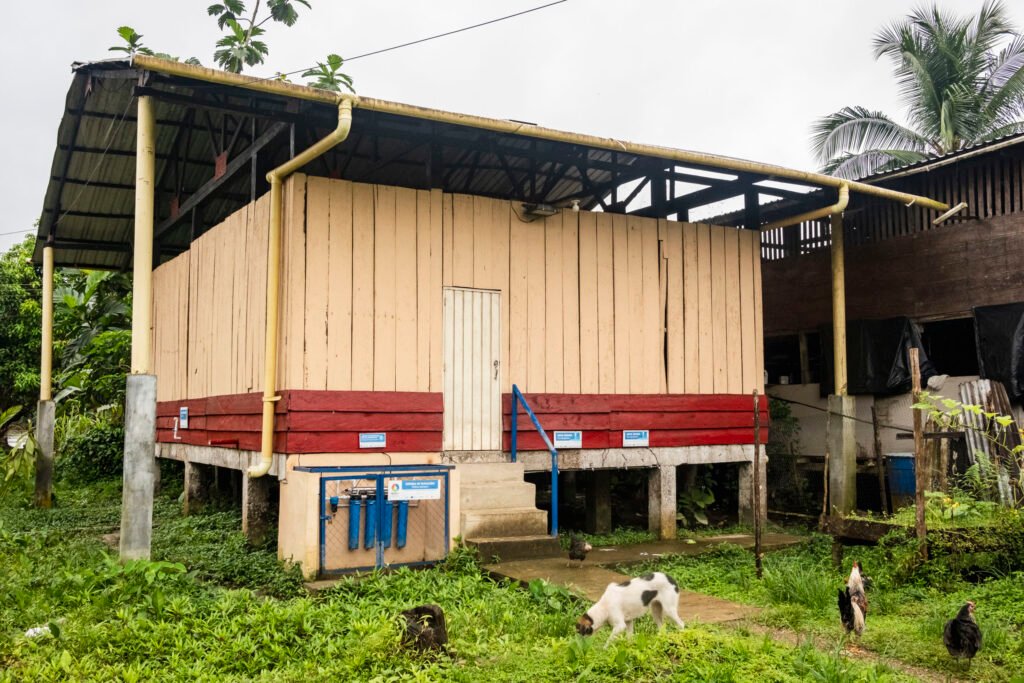
Access to safe water had also been a major challenge for families in this community. For a long time, some residents had to leave the territory to fetch water from other places, exposing themselves to significant risks.
But this changed thanks to the community’s joint efforts and humanitarian assistance. Today, José walks between the houses toward the “Aguateras” system—a structure that contains several tanks storing rainwater. This system filters water, removing parasites and contaminants that often cause stomach and respiratory illnesses among community members.
“Now, with this water system that has been installed in our community, we have a reliable water supply. Families no longer have to go elsewhere—we are now using this service,” José says.
The construction of this space was not just about infrastructure. Workshops and training sessions were also held with families on water care, hygiene, and waste management. In addition, a group of community members was strengthened and provided with supplies so they can take responsibility for promoting proper water use and maintaining the system, which now serves more than 750 people.
Health as a Community Matter
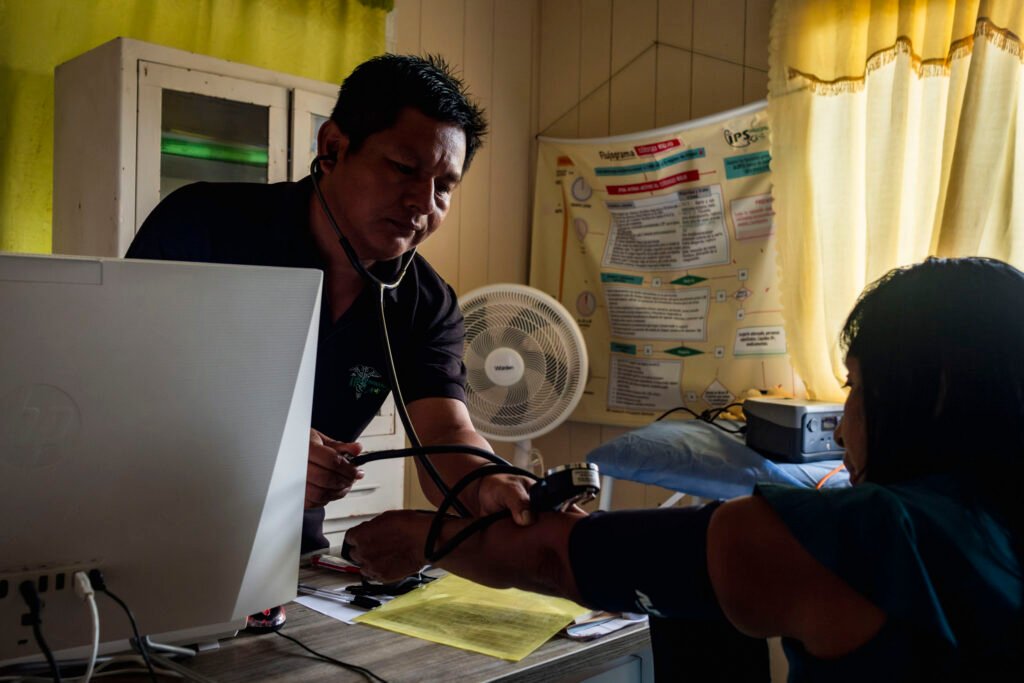
In the community, health is a collective effort that brings together ancestral knowledge and Western medicine. Higinio, the nurse at the health post, walks along its shelves, which are now stocked with different medicines and supplies to respond to emergencies.
Thanks to humanitarian assistance, the health post has been equipped with solar panels and internet access, allowing staff to notify nearby health centers in advance when referring patients in more serious condition. “The health post had nothing before—now it has the necessary supplies for a doctor to work,” Higinio explains.
In addition, the community has established evacuation routes and mental health care protocols, ensuring that no one is left unattended in emergencies. Families have taken part in workshops on physical, sexual, and reproductive health, first aid, emotional management, and resilience strategies. These spaces strengthen the community’s ability to care for one another and respond collectively to challenges.
For Denise, a member of the community, health also extends to areas such as self-care, mental well-being, and protection against gender-based violence. “We learned strategies to care for our emotions and those of our children,” she says.
Harvesting Life, Weaving Community
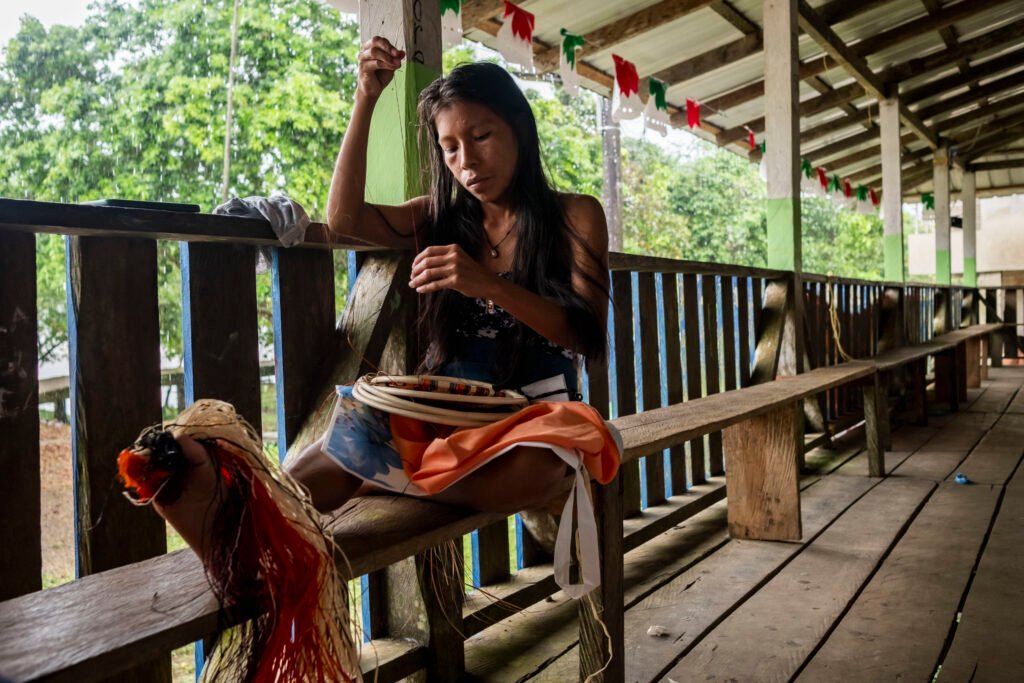
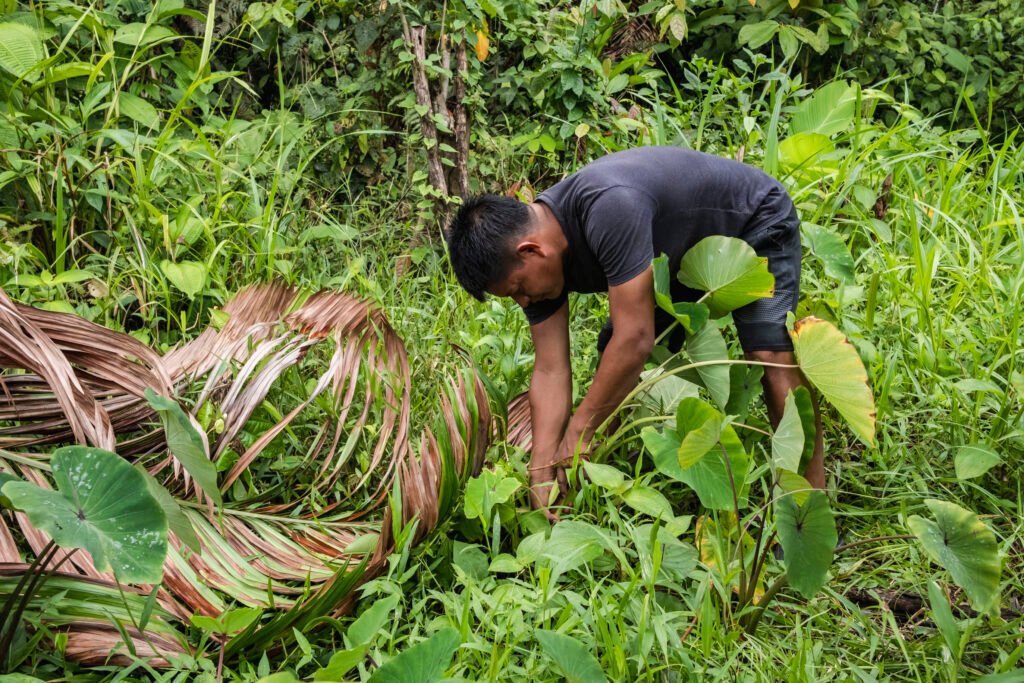
Food security has been a cornerstone in strengthening the community’s well-being. Families continue working to develop crop production of bananas, cassava, taro, yams, and pineapple.
Families have participated in training programs and agricultural practices, learning to plant, care for the land, control pests, and preserve seeds adapted to their territory. They have also received tools and supplies that facilitate food production and promote the exchange of traditional knowledge, strengthening the community’s capacity to improve its food security.
Beyond food production, handicrafts are one of the community’s main sources of livelihood. More than 120 people produce traditional vases and baskets made from werregue, chocolatillo, and beadwork. These pieces are sold or exchanged with other communities, generating income or facilitating access to food.
“For handicrafts, we were given display cases and kits with everything needed to train other women—yarn, balls, construction paper, markers, colored pencils, and many other materials,” says Lucha.
This work not only helps sustain families’ livelihoods but also preserves culture and traditions. Through humanitarian assistance, the community has received tools, materials, and supplies to strengthen production, and has developed strategies to market their crafts—helping sustain their economy while keeping their cultural identity alive.
The change brought by this support has been evident for Ms. Lucha: “Before, the association didn’t have the funds to go out and sell the vases. This year, things improved because the MIRE+ Consortium helped us understand our rights and promote our traditional crafts free of charge.” She also notes that they have begun selling their crafts through social media.
Building and Strengthening Community
Gerard walks between the houses with a calm demeanor that conveys confidence. He is responsible for looking after the people living on the reserve. While he acknowledges significant progress, he knows there is still a long way to go. “This is our territory, our mother earth,” he says.
Over these two years of support from the MIRE+ Consortium, the community has achieved significant progress: strengthening its organizational capacities; improving access to water and healthcare; recovering part of its livelihoods; and reinforcing food security. These achievements have built trust among both young people and adults, who now see the consortium’s presence as a key source of support.
“The community had fallen silent, and we didn’t know how to face the difficulties we had. Today, thanks to the efforts of the MIRE+ Consortium, families understand the problems we face and the steps to follow. They have also left us with organized teams,” José says. For him, this partnership is crucial, but he also knows that his community must move forward through its own means—and that can only be built collectively.
Today, they continue advancing in their recovery. The community is strengthening its organization, confronting challenges with its own resources, and keeping its culture alive. Every action, every collective effort, is a step toward a more peaceful future. They understand that transforming their territory is not the task of a few, but a shared responsibility.
The support of the MIRE+ Consortium was made possible through funding from the European Union, the United States Department of State, the Spanish Agency for International Development Cooperation (AECID), and the Swiss Agency for Development and Cooperation (SDC).
The MIRE+ Consortium is an emergency response mechanism established in 2020, led by the Norwegian Refugee Council in partnership with Action Against Hunger and Médecins du Monde. Together, they provide humanitarian assistance and support the early recovery of communities that have been recently displaced, confined, or facing complex humanitarian situations due to armed conflict and disasters in Colombia.